Published September 24, 2026
The system
This case comes from a small oilfield chemical plant in the Houston, Texas area that went out of business in the mid-1990s. As the plant closed, chemical drums were returned from job locations around the United States: most were old drums, partially filled with unused paraffin treating compounds, demulsifiers, oil soluble corrosion inhibitors and water soluble corrosion inhibitors. About 400 drums accumulated on site, sitting in a grassy area near the plant’s storage tanks. The study document that records this cleanup does not name the plant, its owner, or any person involved, and it does not give the site’s total area or the exact dates the drums accumulated. Waste Water Innovations is confirming customer permission to name the plant before any future version of this page would include it.
The problem
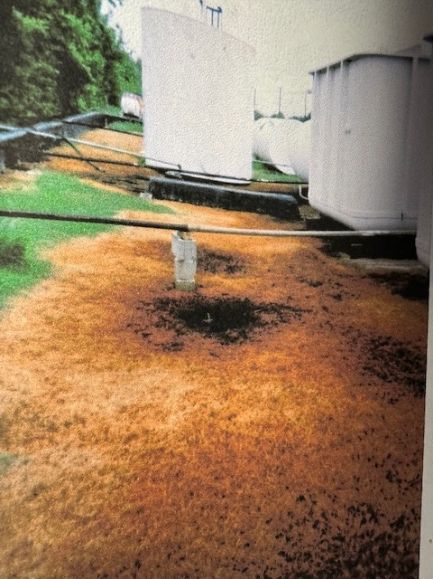
As the returned drums piled up, many were not properly stored. Some leaked; others were left lying on their side, and chemical escaped through the bungs onto the grass beneath and around them. By the time roughly 400 drums had accumulated, the results were disastrous: much of the grass was dead and brown, and pollution across the affected area was widespread and, in the study document’s own words, extremely obvious. The document describes the damage to the soil and grass as extreme and includes photographs taken while the drums were being removed. It does not report a soil analysis or give a measured extent of the polluted area in acres or square feet.
What we did
After the drums were removed, we sprayed a 5 to 10 percent solution of water and the hydrocarbon cleanup formulation of DRP Accelerator, which pairs the oxygen carrier with a bacteria package, over the polluted area. Because some spots carried a heavy concentration of chemical, we repeated that treatment several times over the following three to six months. The study document does not report a measured dilution rate beyond the 5 to 10 percent range, the number of applications at any single spot, or the exact spray volume used across the site.
How it was measured
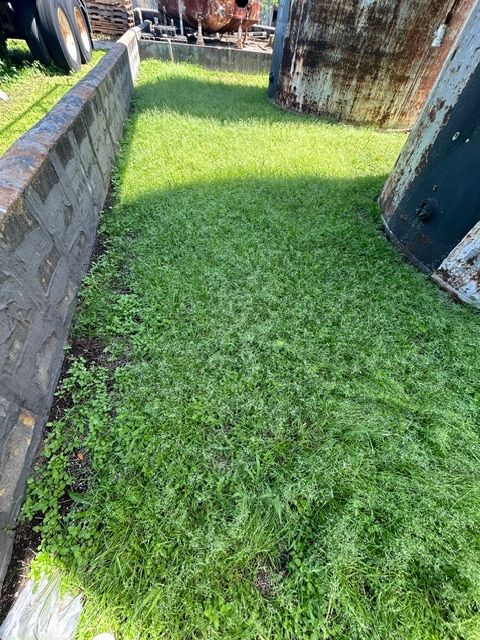
The study document reports visual observation of the site over time: photographs taken while the drums were being removed, and photographs of the same plant after cleanup. No soil sampling or laboratory analysis is referenced anywhere in the document. The document does not name who took the photographs or applied the treatment, and it does not give specific calendar dates for when the drums were removed, when spraying began, or when the eight month mark was reached, only that no sign of the pollution remained by then.
Results
| Measure | Result |
|---|---|
| Grass and soil condition before treatment | Dead, brown grass; pollution described as widespread and extremely obvious |
| Treatment | 5 to 10 percent solution of water and the hydrocarbon cleanup formulation, sprayed over the area and repeated at the heaviest spots over 3 to 6 months |
| Grass and soil condition after 8 months | No sign of the pollution remained; a grassy area that needed regular mowing |
| Product cost | Under $1,000 in chemical cost (the report’s figure) |
| Savings | The report estimates more than $200,000 saved |
Eight months after the drums were removed, the study document reports a grassy area that needed regular mowing again, with no sign of the pollution left. The report puts the chemical cost of the whole treatment at under $1,000, against its own estimate of more than $200,000 saved.
Limitations
This case rests on photographic evidence and the study document’s own written account, not a laboratory soil analysis; the document does not report any sampling of the soil before or after treatment, so it cannot speak to hydrocarbon concentrations below the surface. It does not give exact dates for when the drums were removed, when spraying began, or when the eight month mark fell on the calendar, and it does not name who performed the work or took the photographs. The document dates to a plant closure in the mid-1990s and does not report the site’s exact size or the total volume of chemical involved beyond the approximate drum count. The estimate of more than $200,000 saved is the report’s own figure, not an audited cost comparison. For a future customer, a result like this is a goal we measure, not a promise.
Proof assets
- The study document, “Bioremediation of a Chemical Plant in Houston, Texas,” with photographs taken while the drums were being removed and again after cleanup.
- Waste Water Innovations is confirming customer permission to name the plant before any future version of this page names it.