CASE STUDIES
Case Studies: Sludge, Odor, H2S and Oil Cleanup in Municipal, Farm and Field Systems
Thirteen field programs, each with its method and its numbers, across municipal collection systems, farm lagoons and oil and gas sites. Among them: a north central Texas dairy whose sprinkler line pumped for twelve days without plugging after managing one day the year before, a Texas dairy that won the air permit to double its herd once the flush-lane odor was gone, three Texas lift stations where odor complaints stopped within a day and stayed stopped, and a soil test in which native bacteria given usable oxygen beat every bacteria product on hydrocarbon removal. A central California municipal lagoon measured at eight fixed points lost 15.2 percent of its sludge depth in twelve weeks. A 6,000-cow Utah dairy went from clogged pumps to running ones within three months while a third-party lab watched BOD fall from 3,660 to 161 mg/L. A Texas lift station went from 280 ppm of hydrogen sulfide to zero and held there. A Colorado feedlot lagoon dropped ten percent of its solids in five weeks while waste kept arriving. A Texas university pumped about 450,000 gallons from a goat lagoon it had expected to dredge. Every write-up states what was measured, how, and where the limits are.
We dose real systems and measure what the sludge does.
- At a central California municipal lagoon, total sludge depth across eight fixed GPS points fell from 105 inches to 89 inches in twelve weeks, a 15.2 percent reduction, with 11.5 percent at six weeks.
- At a 6,000-cow dairy in central Utah, third-party lab results over four months showed biochemical oxygen demand falling from 3,660 to 161 mg/L and oil and grease falling to non-detect, and the pumps ran again within three months.
- At a lift station in south central Texas, the accelerator dosed at 14 to 20 ppm took hydrogen sulfide from 280 ppm to 4 ppm on the first day and held it at 0 ppm for eight consecutive days, where an iron compound at 68 ppm had managed 15 ppm at best.
- At a cattle feedlot lagoon near Sterling, Colorado, solids fell at thirteen of fourteen measured points over five weekly applications, a ten percent reduction while the lagoon kept receiving waste.
- A Texas university research facility pumped an estimated 450,000 gallons from its goat waste lagoon after treatment, against a dredging quote of more than $250,000 that did not include the two plugged lift stations and the 600-foot line the program also cleared.
- At a 1,000-head dairy in north central Texas, the lagoon sprinkler line pumped for twelve days without plugging after four drums of accelerator over eight weeks, where it had plugged after one day the year before.
- Every Waste Water Innovations program is measured against a baseline recorded before the first dose, at fixed points that are returned to for each reading.
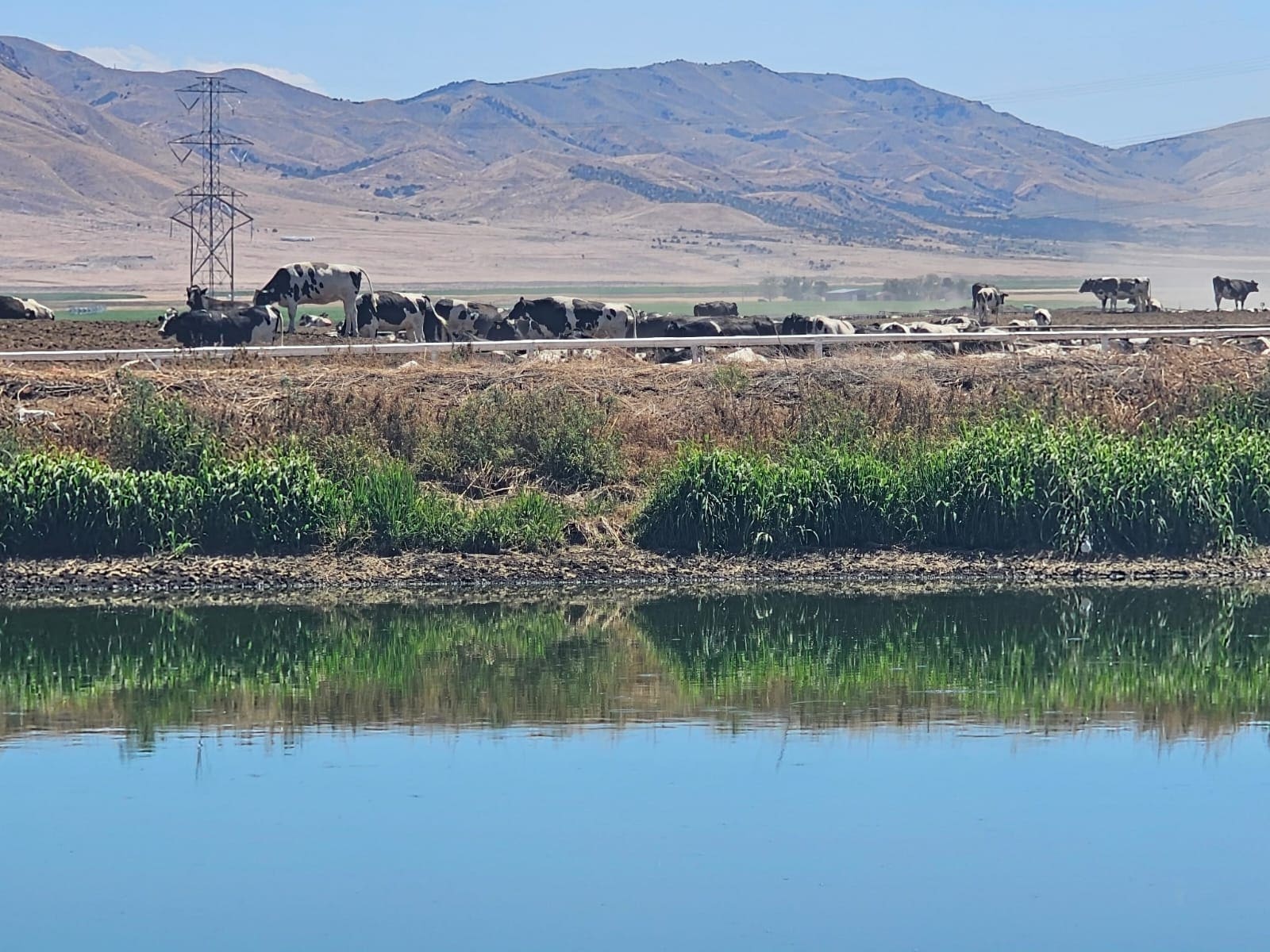
Central California: 15.2 percent less sludge in twelve weeks
A municipal treatment facility in central California asked whether dosing could take sludge out of a lagoon cell without mechanical removal. We dripped the accelerator at the lift station and dosed the cell directly, then measured sludge depth with a Sludge Judge at eight fixed GPS-referenced points. The total across the eight points went from 105 inches at baseline on May 27, 2025 to 93 inches on July 8, an 11.5 percent reduction, and to 89 inches on August 19, 15.2 percent in twelve weeks, while the lagoon stayed in service and irrigation drawdown moved the water level through the summer. The recommendation that came out of it was to keep dosing that cell while the others are dredged, and to add a dosing point at the first lift station.
Central Utah dairy: BOD from 3,660 to 161 mg/L, pumps running in three months
A 6,000-cow dairy recycles about 200,000 gallons a day of pond water back onto the farm for wash-down, so when sludge clogged the pumps the whole operation felt it, and several additives had already failed. We dripped the accelerator into the ponds daily. Within three months the operations manager reported the sludge liquefied and the pumps running again. A third-party laboratory sampled the ponds four times over four months: BOD fell from 3,660 to 161 mg/L, COD from 6,950 to 710, suspended solids from 1,160 to 151, and oil and grease from 27 mg/L to non-detect. Odor rose before it fell, from 1,000 to 2,000 threshold odor number and then to 1, which is the cleanup period doing its work. The full lab table, including the one parameter that rose, is on the case page.
South central Texas lift station: hydrogen sulfide from 280 ppm to zero
A lift station had been dosing an iron compound at 68 ppm to control hydrogen sulfide that typically ran around 210 ppm. The iron brought it to 15 ppm at best and usually left it above the OSHA ceiling of 20 ppm, often back above 100. The accelerator replaced it at 14 to 20 ppm, about a quarter of the iron dose. On the first day the station's monitor went from 280 ppm to 4 ppm. After an injection pump problem interrupted the record, the reading held at 0 ppm for eight consecutive days. The difference is the mechanism: iron scavenges sulfide after the bacteria have made it, the accelerator keeps them from making it.
Colorado feedlot lagoon: ten percent of the solids gone in five weeks
A cattle feedlot lagoon near Sterling, Colorado, a quarter mile long and ten feet deep, was filling with pen waste and heading for a dredge. Five weekly surface applications of the accelerator were measured at fourteen fixed points with a plate on a stick, before and after, with four inches deducted for rainfall. Solids fell at thirteen points and were unchanged at one. The study calculates over 150,000 cubic feet removed, about forty-six tractor-trailer loads and a ten percent reduction, while the lagoon kept receiving waste hauled in every day.
Texas university goat lagoon: pumped, not dredged
A university research facility in Texas had a goat waste lagoon that had not been dredged in a decade, two lift stations full of solids and a 600-foot, 18-inch line that was completely plugged, and a dredging quote of more than $250,000 for the lagoon alone. We sprayed the accelerator on the lagoon daily and dosed the lift stations. The plugged line began to flow within a week and was open in under two weeks, the sludge thinned to a pumpable consistency, and an estimated 450,000 gallons were pumped out with trash pumps and spread on the fields as fertilizer. The university's own lab identified twenty-seven bacteria species in the sludge and reported the accelerator performed better than advertised. The whole program was priced at $30,000. One field report, not a monitored series, and we say so on the case page.
COMMON QUESTIONS
Straight answers.
Will my lagoon get the same result?+
Each of these is one system under its own conditions, which is why every write-up carries its limitations. The program breaks down organic sludge and keeps hydrogen sulfide from forming. It does nothing for sand, grit or broken equipment. What we promise is method: a baseline before the first dose, fixed points, and readings you can audit.
Who measured the results?+
The California sludge depths were taken with a Sludge Judge at fixed GPS points. The Utah dairy results come from a third-party laboratory. The Texas readings are the lift station's own hydrogen sulfide monitor. The Colorado survey used a plate on a graduated stick at fourteen marked points. The goat lagoon figure is the pump-out volume. Each case page names the method and what was not recorded.
Can I see the full write-ups?+
Yes, each one is linked below with its dates, its method, its data table and its limitations. Customer names are added as each customer confirms in writing.
How would you measure results on my system?+
We start with your existing wastewater data and a site survey, then set a baseline before the first dose: sludge depth at fixed points, H2S readings, the parameters you already report. From there we test on a schedule and work with your staff on the readings, so you see which direction the system is moving month by month.
CASE STUDIES
The write-ups, with the measurements.
Bacteria Growth Test: Four to Eight Times More Bacteria in a Day, Larger Cells by Day Five
A laboratory bacteria growth test found an estimated four to eight times more bacteria in the DRP Accelerator jar after one day and forty to one hundred times more by day four, with visibly larger individual cells by day five.
Oil Stains Around Every Well Head Gone in Six Months, With a Pump-Up Sprayer
A central Texas oil and gas field cleared oil stains from every well head with a diluted DRP Accelerator solution applied by hand sprayer, meeting a six month deadline with no digging.
Cattle Feedlot Lagoon, Colorado: A Fourteen-Point Sludge Survey Over Five Weeks
A Colorado feedlot lagoon measured at fourteen fixed points before and after five weekly applications: solids down at thirteen points, a ten percent reduction while waste kept arriving daily.
Central Utah Dairy: Lab-Measured Pond Recovery and Pumps Running Again
A 6,000-cow central Utah dairy: daily dosing, pumps running again within three months, and third-party lab results over four months with BOD down from 3,660 to 161 mg/L.
Oil-Contaminated Soil Test: Native Bacteria Plus Oxygen Beat Every Bacteria Product
A controlled comparison test found DRP Accelerator with no bacteria added removed more hydrocarbon from East Texas soil in four weeks than three purchased bacteria products working alone, and even more once bacteria were added alongside it.
Chemical Plant Drum Spill: Green Grass Eight Months After the Drums Left
A Houston-area chemical plant's storage yard, killed brown by chemical leaking from roughly 400 returned drums, returned to green grass within eight months of spraying with the hydrocarbon cleanup formulation of DRP Accelerator.
Municipal Lagoon Sludge Reduction: A Pond 2 Field Project
A central California lagoon facility dosed one of its ponds through the lift station and measured sludge depth on a fixed survey grid, to see whether dredging could be put off.
Lift Station BOD Cut From an Average of 370 to 53 mg/L in One Month
A large lift station in South America saw influent BOD averaging 370 mg/L fall to an average of 53 mg/L over a month of DRP Accelerator treatment, an 86 percent drop.
Dairy Lagoon Pumped for Twelve Days Without Plugging, After One Day the Year Before
A 1,000-head Texas dairy lagoon pumped for twelve days without plugging after DRP Accelerator treatment, up from one day the year before, a result the report estimates saved the operator more than $500,000.
Dairy Odor Cut Enough to Win the Air Permit for Twice the Herd
A Texas dairy's flush tank odor was blocking a larger air quality permit until continuous DRP Accelerator dosing at the ditch cleared it enough for the state to approve doubling the herd.
Lift Station H2S: From an Iron Scavenger to Prevention at the Source
A south central Texas lift station moved from an iron compound that reacted with hydrogen sulfide after it formed to DRP Accelerator, dosed upstream to stop the gas from forming.
Lift Station Odor Gone in a Day at Three Texas Stations, and Kept Away
Three Texas lift stations under active odor complaints went quiet within a day or less of dosing with DRP Accelerator, then held the result on a low maintenance rate.
University Goat Lagoon: About 450,000 Gallons Pumped, Not Dredged
A Texas university research facility pumped an estimated 450,000 gallons from a goat lagoon that had not been dredged in a decade, cleared two plugged lift stations, and avoided a dredging quote of more than $250,000.
Mangrove Oil Spill, Venezuela: Hydrocarbons Down 79 Percent in 67 Days
A Venezuelan research institute's mangrove gulf study found DRP Accelerator cut the hydrocarbon index 79.03 percent in 67 days across five weekly applications.