AGRICULTURE / DAIRY
Dairy Lagoon Treatment That Works on the Sludge, Not Around It
Dairy lagoon treatment is a monthly service that gives the bacteria already living in your lagoon the oxygen they need to break down manure sludge and wash-down solids faster. DRP Accelerator is an inorganic compound that carries that oxygen to the bacteria already in the pond: no bacteria added, no enzymes added, no chemical additives. It works in the anaerobic sludge at the bottom and the aerobic layer at the surface alike. We review your flow and wash-down volume, calculate a dose and frequency, survey the site for a delivery point, and dose the ponds with a continuous drip, monitored and refilled on a schedule, for as long as you want the result.
Sludge you can pump is a lagoon you can manage.
- Dairy lagoons lose capacity when manure solids and wash-down water settle faster than the resident bacteria can digest them.
- When bacteria run out of dissolved oxygen in a lagoon, they take oxygen from sulfate instead, and the sulfide left behind becomes the gas behind lagoon odor.
- DRP Accelerator is an inorganic compound that carries usable oxygen to bacteria already living in a lagoon, with no bacteria or enzymes added.
- With oxygen available, bacteria use it before they strip it from sulfate, so odor-causing sulfide is not formed.
- Aerobic bacteria, once given oxygen, multiply and digest grease and organic solids faster than anaerobic bacteria left alone.
- Recycled wash-down water flowing back into a dairy lagoon carries a daily-dripped dose into the pond with every wash cycle.
- Dairy lagoon treatment tracks biochemical oxygen demand, chemical oxygen demand, suspended solids and oil and grease as the measures of progress while a program runs.
Why a dairy lagoon fills faster than it should
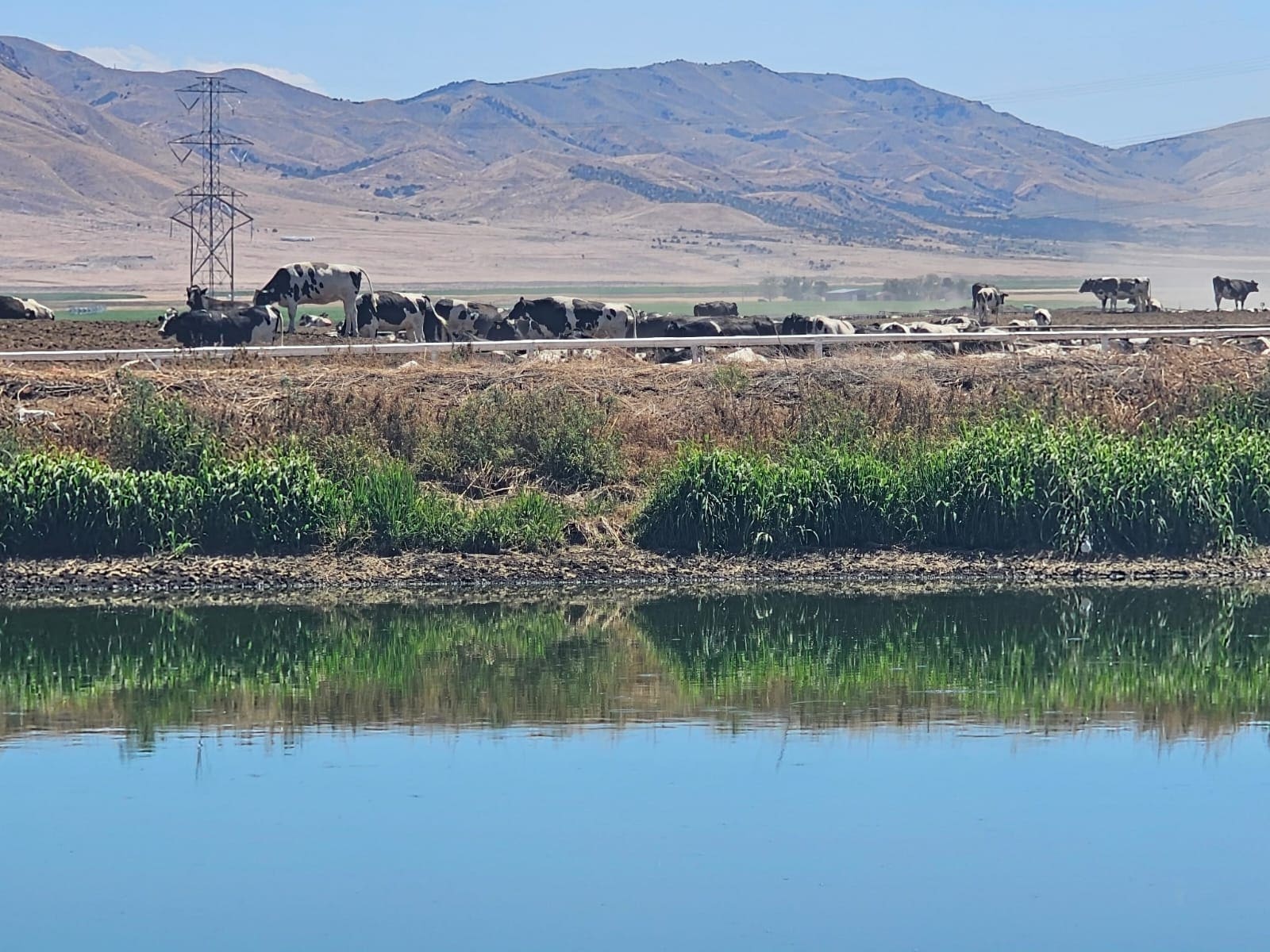
Every wash-down, parlor rinse and yard flush sends manure solids and wash water into the lagoon, much of it recycled water already carrying whatever settled the last time through. The bacteria living in the lagoon can only digest so much of that load in a day, and what they miss settles to the bottom as sludge. As the sludge layer climbs, the lagoon holds less every season and the pumps that draw from it start to strain and clog. The deepest layer also runs out of oxygen, and when the bacteria down there cannot find oxygen in the water, they take it from sulfate instead. The sulfide left behind becomes the gas behind the smell at the fence line. A lagoon falling behind on sludge is usually falling behind on odor at the same time, because both come from the same shortage: oxygen.
What DRP Accelerator changes in the pond
DRP Accelerator is an inorganic compound that carries usable oxygen to the bacteria already living in your lagoon. We add no bacteria and no enzymes: the workforce is already in the pond, and what it has been missing is oxygen, not a new organism. When that oxygen is available the bacteria use it instead of stripping it from sulfate, so the sulfide that turns into odor is not made in the first place. The same oxygen lets the aerobic bacteria, the fast ones, multiply and work through grease and settled organic solids that the slower anaerobic bacteria leave behind. It works in the anaerobic layer at the bottom of the pond and the aerobic zone at the surface alike, which is why we can dose a lagoon directly and let the pond's own mixing carry the effect through it. No chemical additives and no capital equipment, just oxygen the bacteria can use.
Daily drip, wash-down water, and the rest of the program
We start by reviewing your current wastewater data and working out the flow rate and volume your lagoon actually receives, wash-down and recycled water included. From that we calculate a dose and frequency for your operation, then walk the site to find the delivery point where incoming flow will carry the product into the pond for us, often the wash-down line itself, since recycled wash water flows back into the lagoon with every wash cycle and takes the dose with it. The product arrives dry. We mix and activate it in a tank on site, and it drips into the flow daily rather than in one large dose. We monitor the tank remotely and come back to refill it on a schedule set by its size. There is no capital purchase and nothing new for your crew to learn. It is a monthly service, priced after the review, for as long as you want the result, and water quality testing runs alongside so the change shows up in your own numbers.
What the program is measured against, and one honest limit
Dairy lagoon treatment is measured, not assumed to work. We track biochemical oxygen demand (BOD), chemical oxygen demand (COD), suspended solids and oil and grease alongside the program so the change shows up in your own numbers rather than ours. Expect the lagoon to look worse before it looks better: a pond carrying years of deposits mobilizes grease off the walls and suspended solids rise as the bacteria get to work, odor can spike, then the system settles cleaner than it started. The goal is a lagoon where sludge stays low enough that pumps run without clogging. One honest limit: this program works on organic sludge. It will not dissolve sand, grit or bedding, and it will not repair a pump that is already broken. Fix the pump first, and we will go to work on the sludge that stopped it.
COMMON QUESTIONS
Straight answers.
Is DRP Accelerator a chemical additive?+
No. DRP Accelerator, the product used in dairy lagoon treatment, is an inorganic compound that carries usable oxygen to the bacteria already living in the lagoon. We add no bacteria and no enzymes, and the program uses no chemical additives. The oxygen is what changes: with it available, the bacteria stop taking oxygen from sulfate, so odor-causing sulfide is not made, and the aerobic bacteria multiply and dig into grease and organic solids faster.
How does the product get into the lagoon?+
Dairy lagoon treatment is delivered as a daily drip, not a single dose. We mix and activate the dry product in a tank on site and dose it at a delivery point the site survey picks, often the wash-down line, since recycled wash-down water flows back into the lagoon with every wash cycle and carries the dose with it. We monitor the tank remotely and refill it on a schedule.
What if a lagoon pump is already blocked or broken?+
Call a pump service first. Dairy lagoon treatment works on organic sludge, not a jammed impeller or a burned-out motor, and if sand or bedding is what is filling the lagoon, that is a separation problem, not a biology one. Once the pump runs, the program goes to work on the sludge that stopped it.
How is progress measured on a dairy lagoon?+
Dairy lagoon treatment tracks biochemical oxygen demand (BOD), chemical oxygen demand (COD), suspended solids and oil and grease while the program runs, so the change shows up in your own water testing. Expect odor to rise before it falls: a lagoon carrying years of deposits mobilizes grease and solids as the bacteria go to work, then settles cleaner than it started. The goal is a lagoon where sludge stays low enough that pumps run without clogging.
What should I have ready for a system review?+
For a dairy lagoon treatment review: rough herd size, lagoon dimensions and depth if known, how much wash-down water is recycled back into the pond each day, what bedding is used, when the lagoon was last pumped, and the problem that prompted the call. Photos and any water test results help but are not required to start.